There’s a moment that French teachers know well. A student who has spent two years barely stringing a sentence together comes back from a week in Paris and suddenly — fluently, confidently — orders a coffee, gives directions, or describes their day in French without stopping to think.
It doesn’t happen in the classroom. It happens in the city.
Paris is, quite simply, the most powerful French lesson a teacher can offer. Not because it replaces grammar or vocabulary, but because it does something no textbook can: it makes the language feel necessary. Real. Worth using.
Here’s why a school trip to Paris has a genuine, lasting impact on your students’ French — and how to make the most of every moment of it.
Can a school trip to Paris really improve students’ French?
Yes — and research consistently supports it. Language immersion accelerates progress in ways that classroom instruction alone cannot. When students are surrounded by a language in real, meaningful contexts, several things happen at once:
- Listening comprehension improves rapidly — because every street, shop, and conversation is input
- Speaking confidence grows — because students have no choice but to try
- Vocabulary becomes anchored to real experiences — which makes it far more memorable
- Cultural understanding deepens — which is, ultimately, what language learning is for
A well-organised week in Paris can do more for a student’s French than an entire term of lessons. Not instead of teaching — alongside it, and far beyond it.
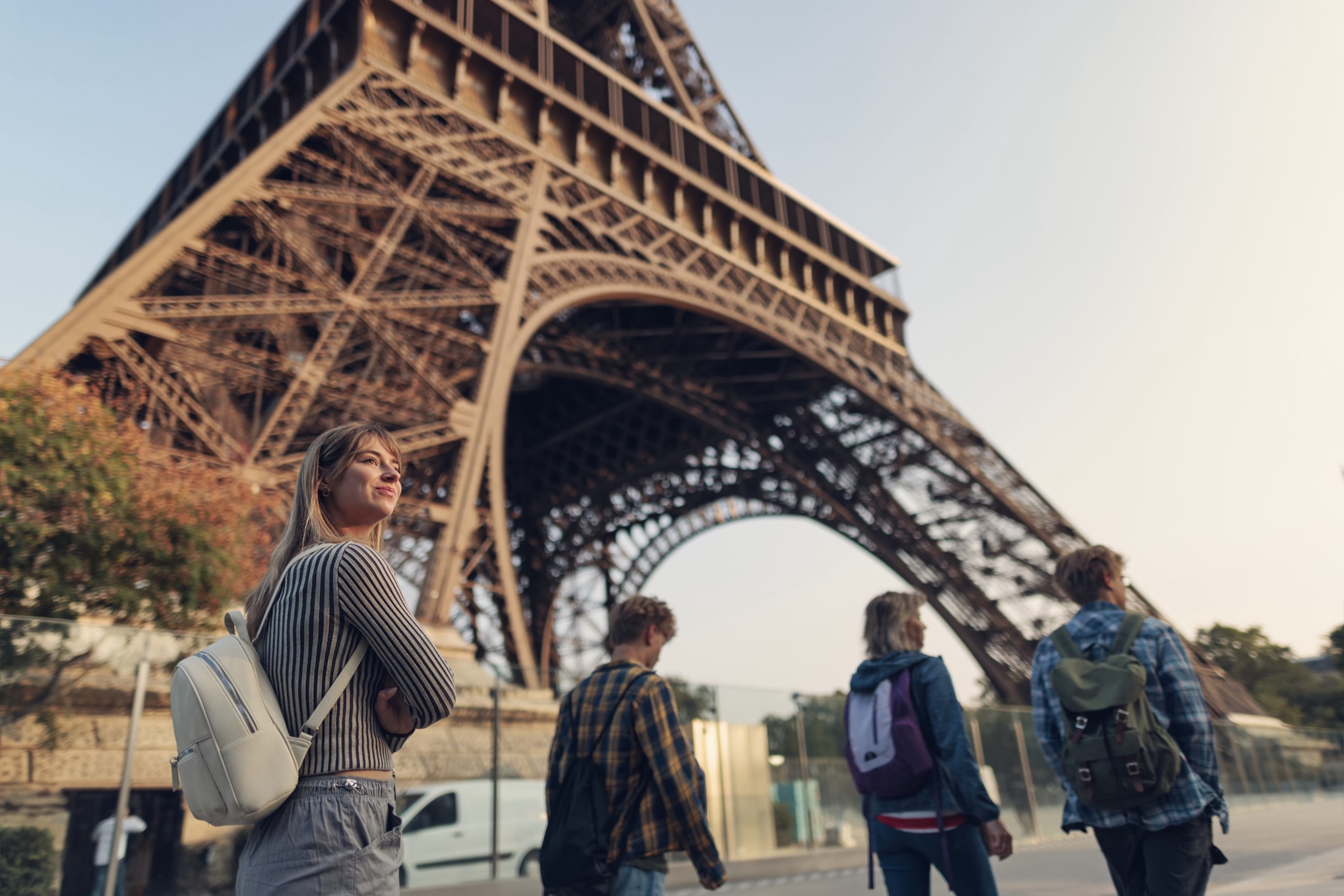
Why Paris works — and why it works so well
The language is everywhere — and it’s unavoidable
Immersion begins the moment the plane lands
From the airport signs to the metro announcements, from the café menus to the museum audio guides, French is the default in Paris. Students can’t opt out. And that gentle, constant pressure — to read, to listen, to decode — is exactly what accelerates language learning. Within a day or two, most students stop translating in their heads and start simply understanding. It’s a shift that can take months in a classroom. In Paris, it often takes forty-eight hours.
Real conversations change everything
No role play. No script. Just actual French.
Ask a student to role-play ordering at a café in class and the exercise feels abstract. Ask them to order an actual croissant from an actual Parisian — and suddenly every word matters. That authenticity is irreplaceable. The small daily interactions of a Paris trip — asking for directions, buying a ticket, thanking a museum guide — are the moments where language moves from something students study to something they use. And that shift, once it happens, tends to be permanent.
Mistakes become interesting, not embarrassing
The city is a forgiving teacher
One of the quietest but most important things that happens on a trip to Paris is that students stop being afraid of getting it wrong. At home, a mistake in class can feel high-stakes. In Paris, it’s just part of the day — and most of the time, it works out fine. A mispronounced word still gets a coffee. A hesitant sentence still gets a smile and a response. Students learn, often for the first time, that imperfect French is still useful French. That lesson is worth more than almost anything a teacher can say in the classroom.
Culture and language are inseparable
Understanding Paris means understanding French
Language doesn’t exist in a vacuum — it grows out of culture, history, and a way of seeing the world. A student who has walked through the Marais, visited the Louvre, and sat in a Parisian café has a completely different relationship with the French language than one who hasn’t. References that once seemed abstract — to Haussmann’s boulevards, to French republicanism, to the particular rhythm of Parisian daily life — suddenly have texture and meaning. The language becomes something they feel connected to, not just something they study.

French cinema, music, and media come alive
Context transforms comprehension
Back in the classroom, a French film clip or song can feel distant — interesting, perhaps, but not quite real. After a week in Paris, those same cultural references land differently. Students recognise the streets, the accents, the rhythms of the language in context. Comprehension improves not just because their ears have been trained by a week of listening, but because they now have a frame of reference that makes everything more legible. Paris gives students the cultural scaffolding that makes the language make sense.
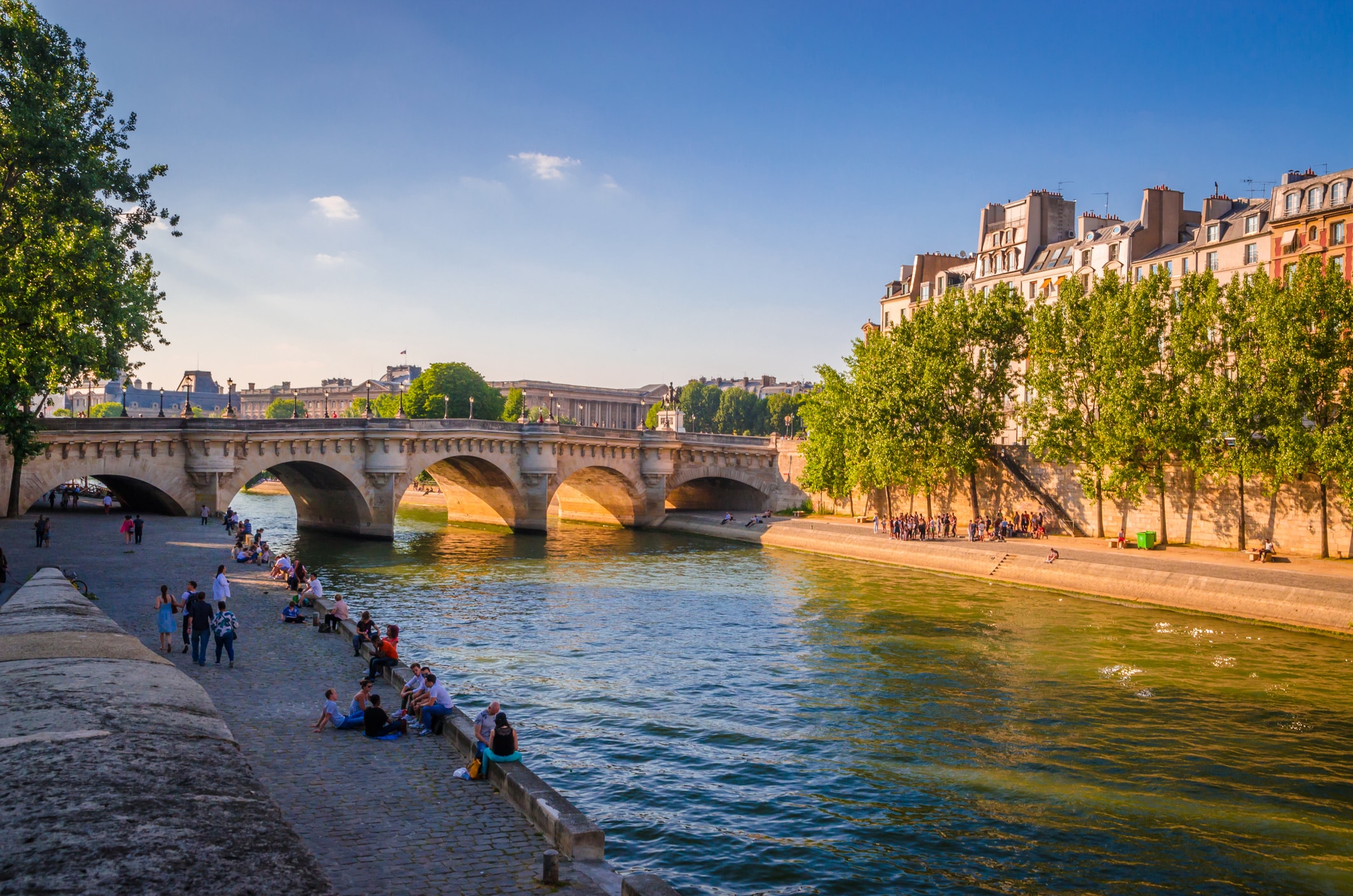
How to make the most of the language opportunity
A trip to Paris improves students’ French almost automatically — but a thoughtfully designed itinerary can amplify that effect considerably. A few things that make a real difference:
- Encourage students to speak French at every opportunity — in shops, at ticket desks, in restaurants. It doesn’t need to be perfect. It just needs to happen.
- Choose guided visits in French where possible — even if students only catch half of it, the listening practice is genuinely valuable.
- Build in time to simply be in the city — the Jardin du Luxembourg, a walk through the Latin Quarter, a morning market. Unstructured time in a French-speaking environment is language learning at its most natural.
- Debrief each day in French — a short group conversation at the end of the day about what students saw, heard, and experienced reinforces everything they’ve absorbed.
- Connect what they see to what they’ve studied — a student who recognises a subjunctive on a museum panel, or a passé composé in a guide’s explanation, feels the language come alive in a way no exercise can replicate.
What teachers tell us — after the trip
The feedback we hear most often from French teachers after a Paris trip isn’t about the specific places visited or the museums explored. It’s about the students.
The quiet ones who found their voice. The ones who had been struggling with oral expression and came back speaking with an ease that surprised everyone, including themselves. The students who started noticing French around them — in films, in music, in their textbooks — and finding it interesting in a way they hadn’t before.
Paris doesn’t just teach French. It reminds students why French is worth learning. And that, for a language teacher, is perhaps the most valuable thing a trip can offer.
Planning a language-focused school trip to Paris
The language benefits of a Paris trip are real whether or not the itinerary is explicitly designed around French learning. But when the programme is thoughtfully curated with language goals in mind — choosing the right visits, building in the right moments, pairing cultural experiences with linguistic ones — the impact is significantly deeper.
Every itinerary we build is tailored to the school’s specific objectives. For French language groups, that means weaving language opportunities naturally into every part of the trip — not as exercises, but as experiences.
The classroom without walls
The best French lesson your students will ever have might not happen in your classroom at all. It might happen at a boulangerie counter on a Tuesday morning, when a student who once froze at the thought of speaking French looks up, smiles, and says exactly what they mean.
Paris has a way of making that happen. Quietly, naturally, without anyone quite noticing — until the trip is over and the French has stayed.
If you’re thinking about a language-focused school trip to Paris, we’d love to help you design something that works beautifully for your students — and for your curriculum.